Family Archive & Preservation Studio
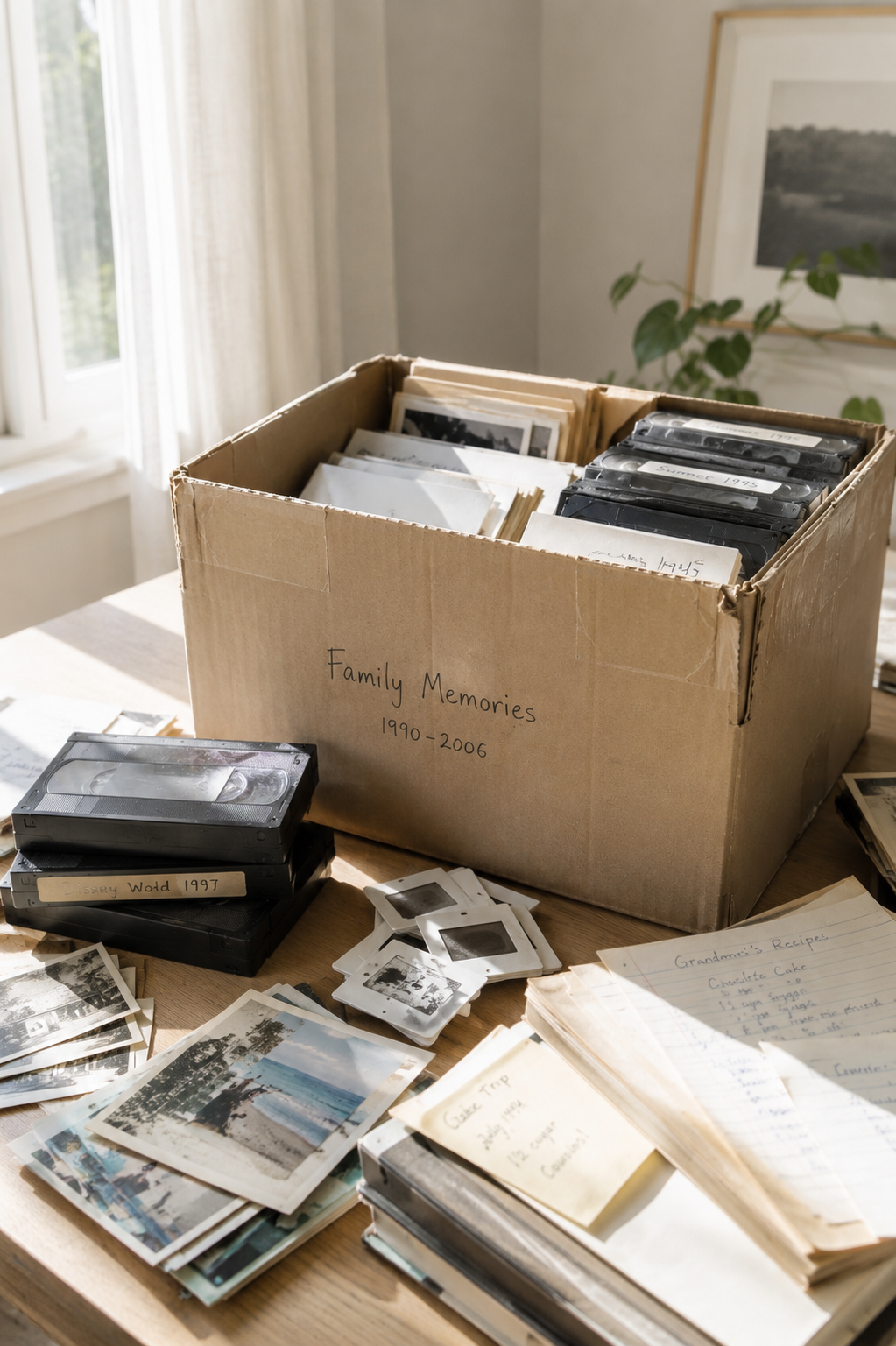
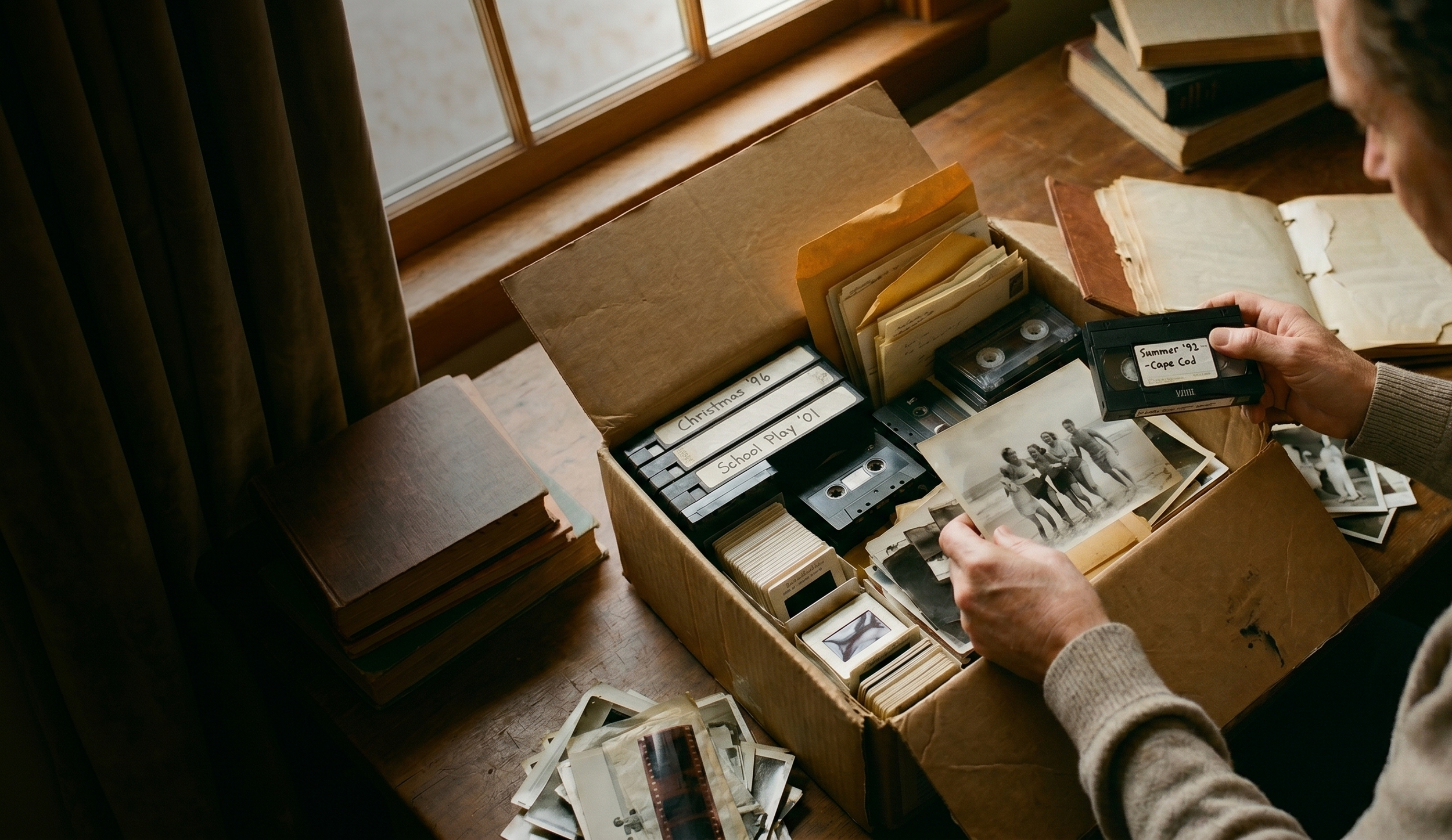
Everybody has a box.
Old videotapes. Photo albums. Camcorder footage.
Entire chapters of family history waiting quietly in storage.
Memory House
helps families preserve, restore,
and make memories accessible again.
WHAT WE PRESERVE
Family history, alive again.
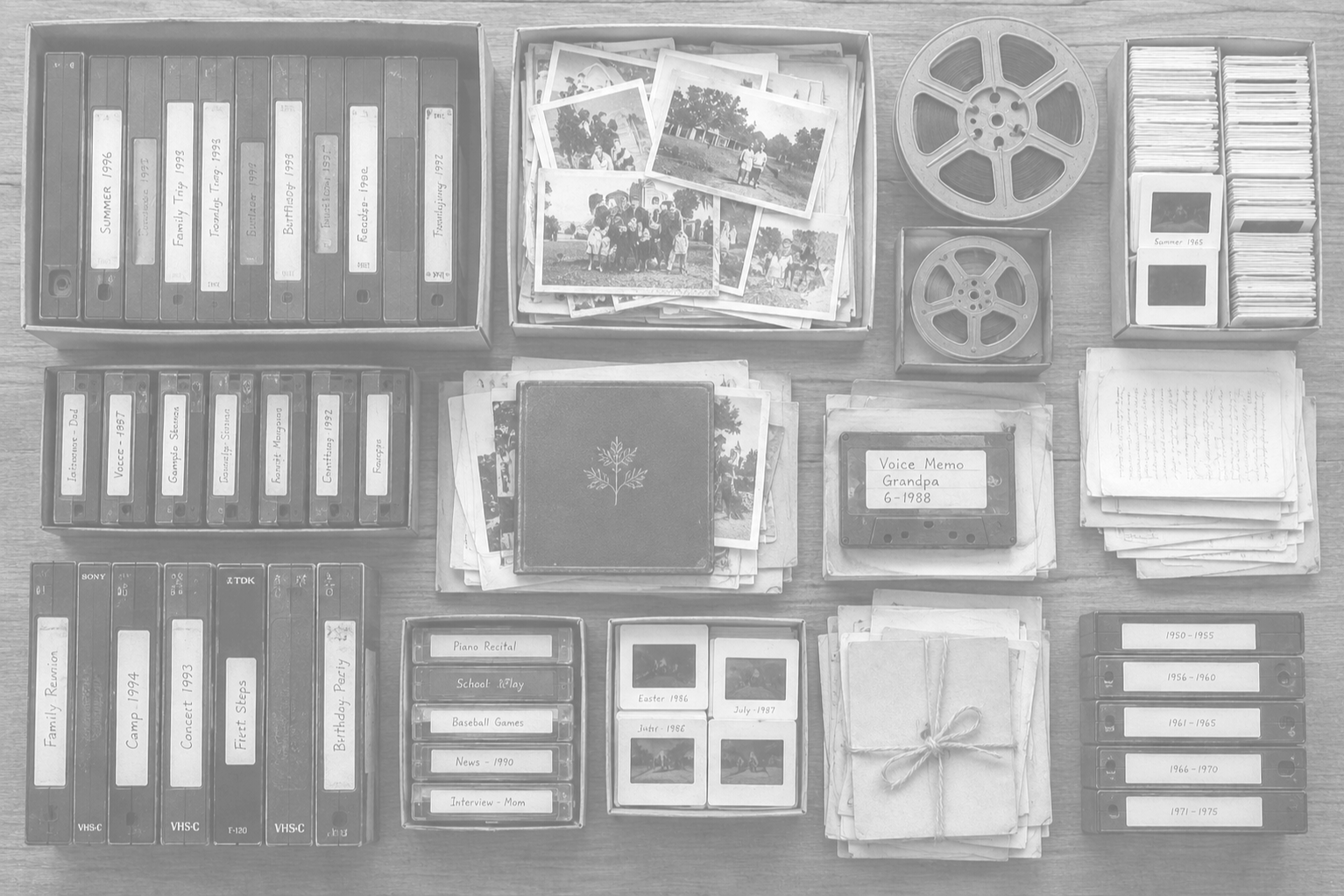
We preserve family films, photographs, voices, and memories so the people who shaped your life can remain close across generations.
Home Movies &
Videotapes
──
◧
VHS, MiniDV, Hi8, camcorder footage, and aging family recordings preserved and restored for long-term access.
Photographs & Albums
──
▦
Printed photographs, albums, slides, and visual family history scanned, restored, and organized over time.
Voices & Audio
Recordings
──
◉
Recorded conversations, family messages, interviews, and familiar voices brought forward again.
Family Archives
──
⌂
Scattered media organized into a clear digital archive designed to remain understandable for future generations.
Restoration & Enhancement
──
✦
Color correction, audio cleanup, stabilization, and careful restoration designed to preserve the feeling of the original.
Legacy Interviews
──
∞
Guided recorded conversations preserving family stories, milestones and presence across generations.
Restore the feeling.
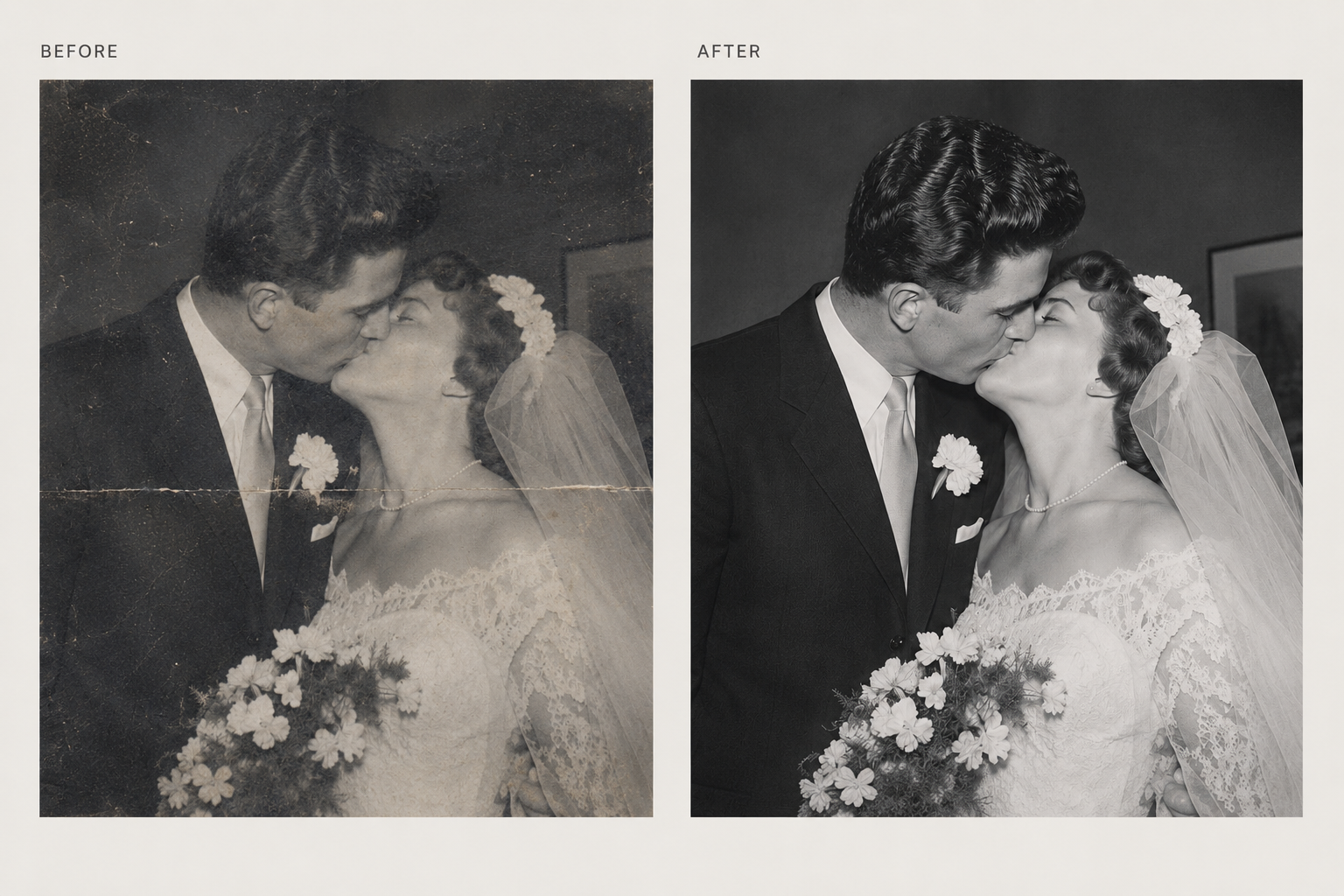
Using modern restoration tools alongside careful human judgment,
Memory House restores aging media with clarity, restraint, and deep respect for the source material.
How It Works
A carefully guided preservation process designed to organize, restore, and protect family archives for the generations still to come.
STEP ONE:
Bring Us The Box
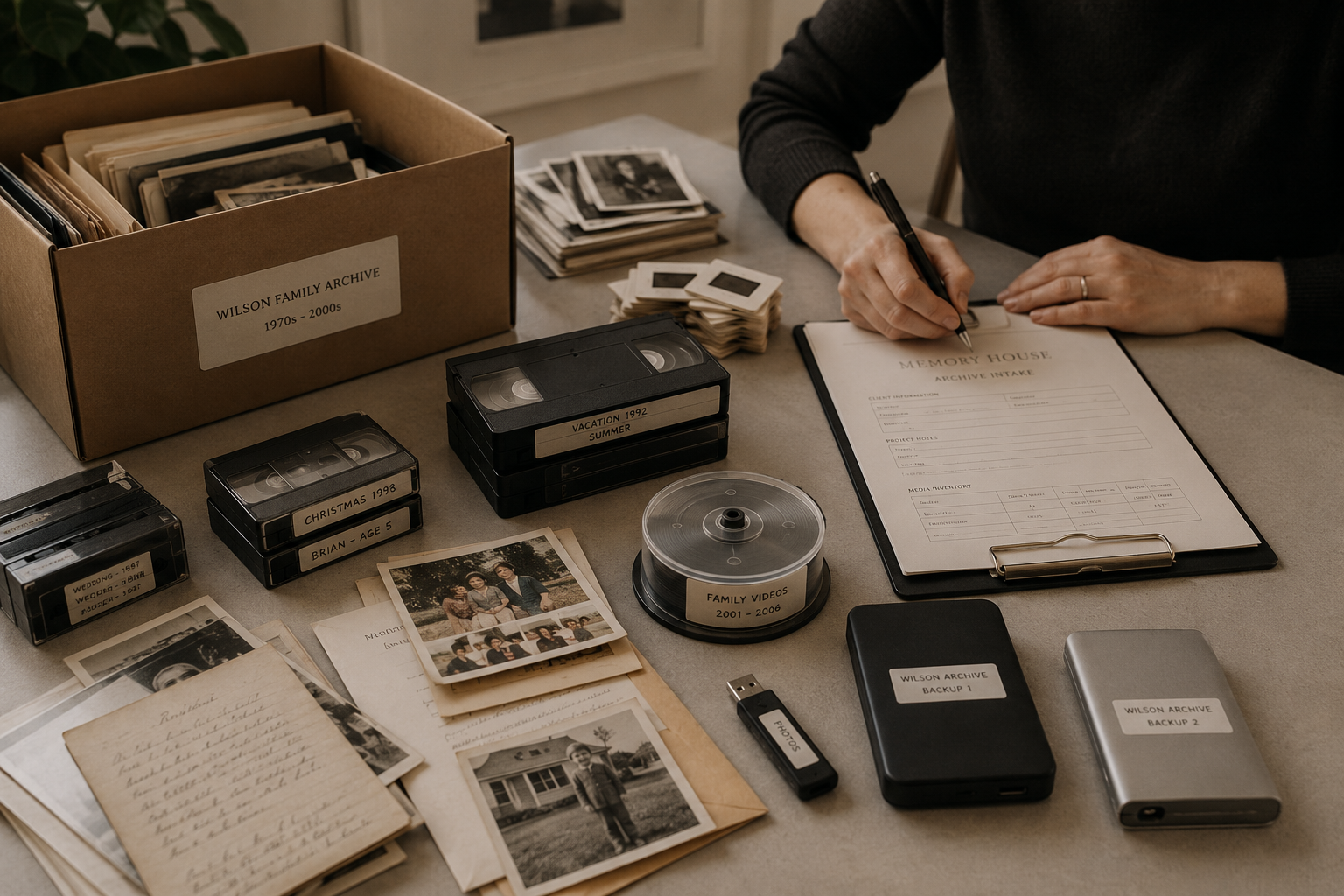
Most family archives begin the same way.
A collection of tapes, photographs, recordings, discs, drives, and documents gathered over decades.
During a scheduled intake appointment, Memory House helps identify what you have, what matters most, and the best path forward for preservation.
STEP TWO:
Careful Digitization
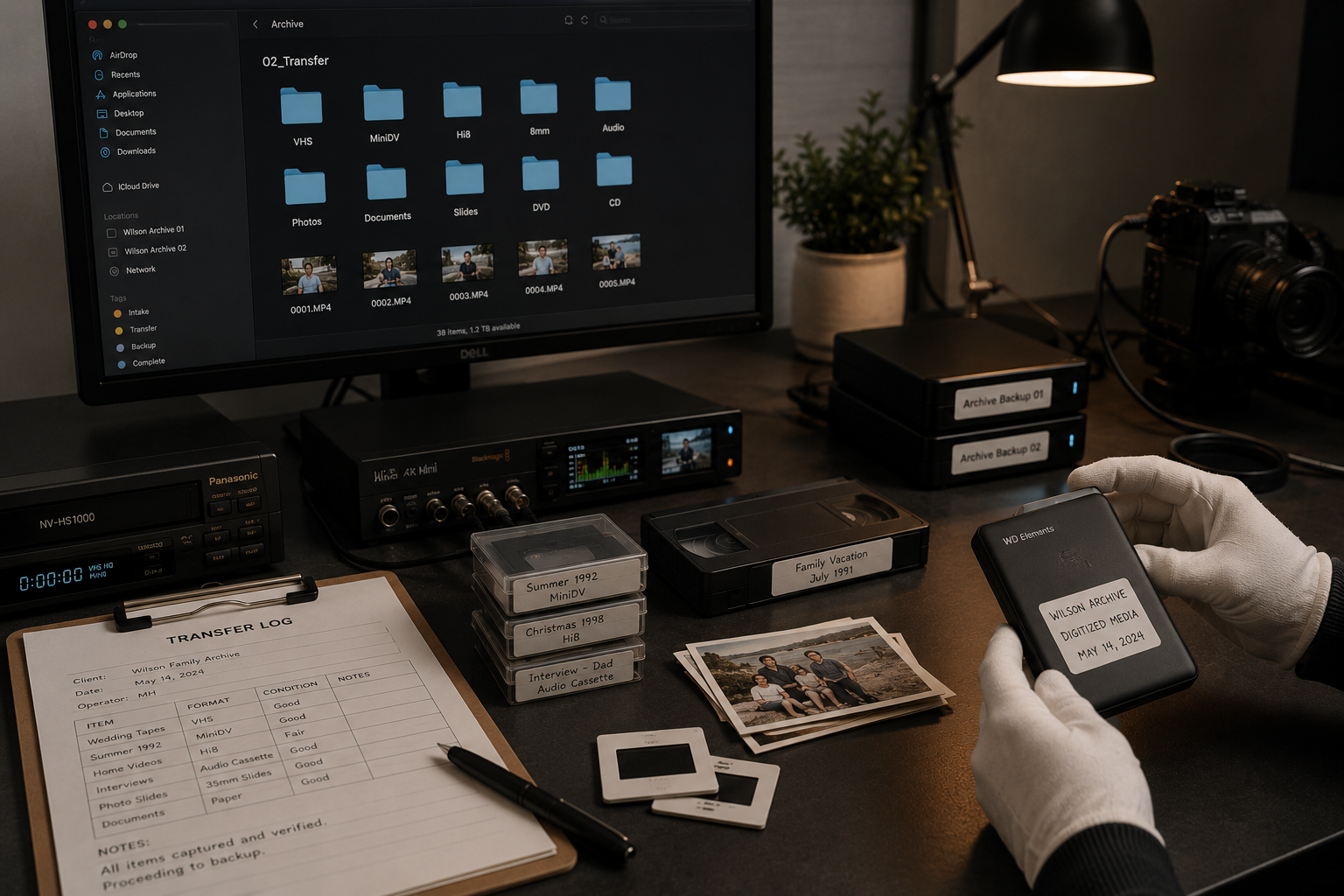
Every archive is carefully transferred and backed up before restoration begins.
Files are labeled, organized, and preserved across modern formats to help ensure long-term accessibility and protection.
STEP THREE:
Restoration & Organization
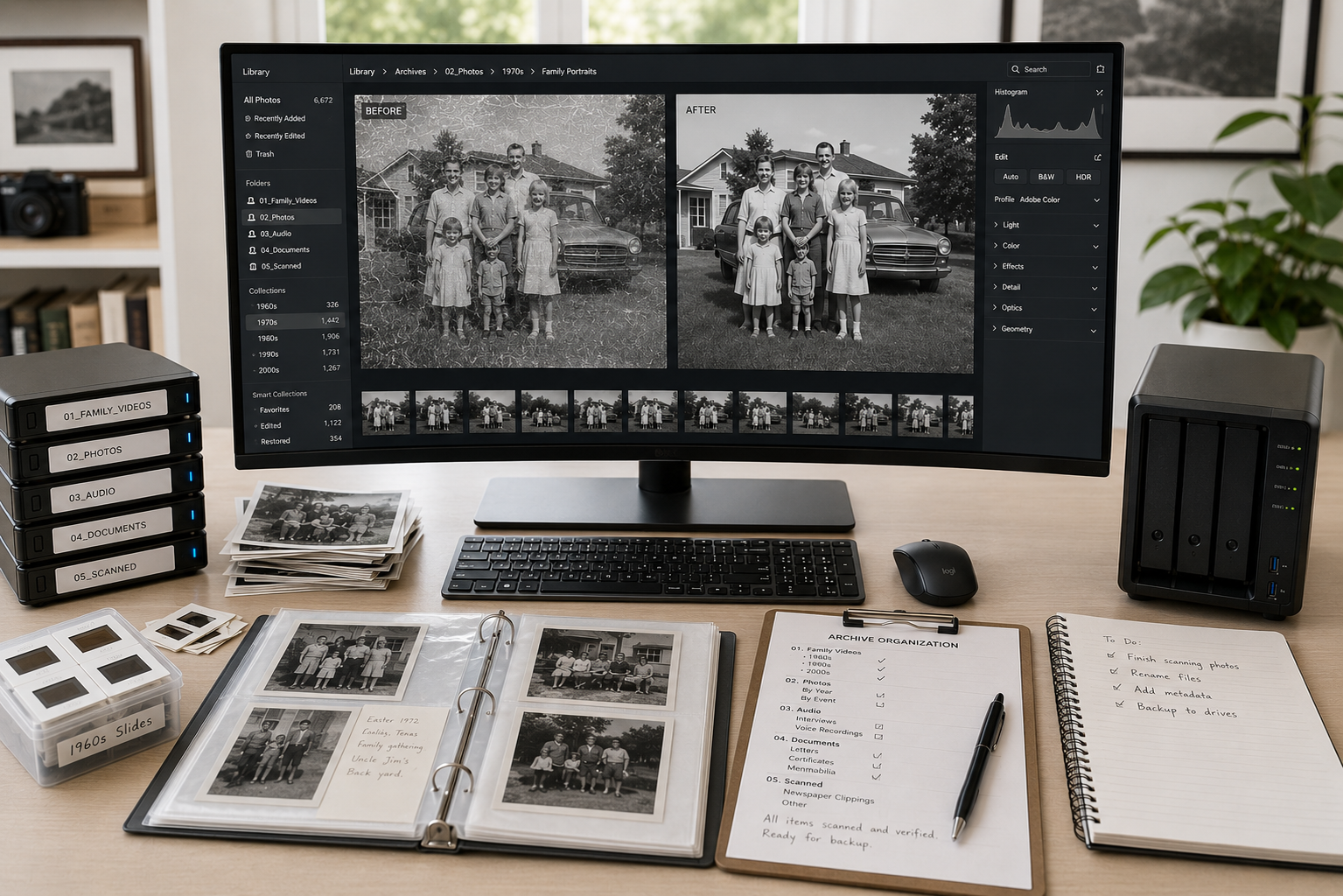
Where appropriate, photographs, footage, and audio recordings can be carefully restored to improve clarity while preserving the integrity of the original memory.
Archives are then organized into structured collections designed to remain understandable for future generations.
STEP FOUR:
Returned With Care
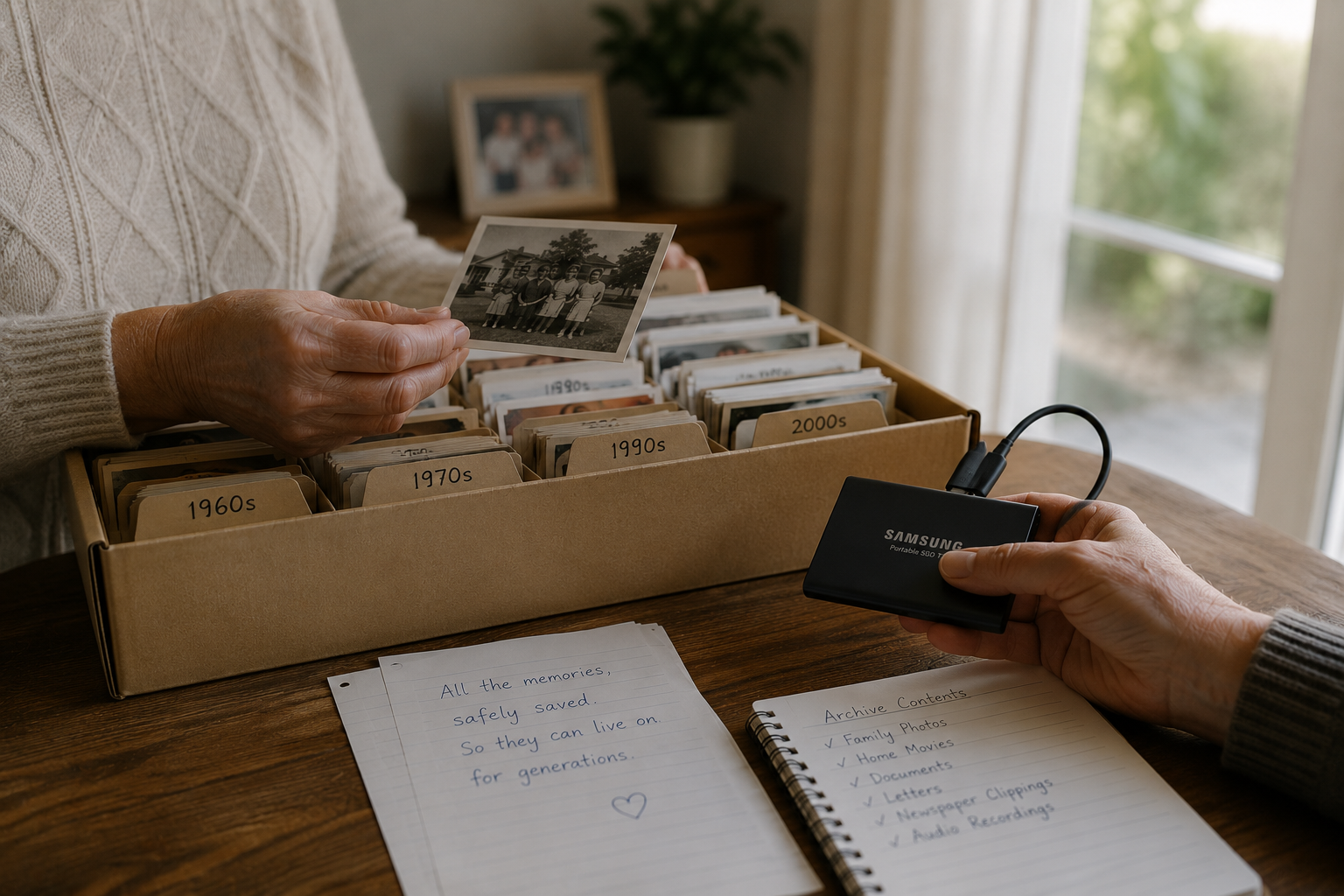
Completed archives are returned as carefully organized digital collections designed to remain accessible, shareable, and protected for the years ahead.
Optional restoration, archive storage, and storytelling services are available for families looking to preserve their history more deeply.
Ways to Begin
-
Video Formats
VHS, VHS-C, MiniDV, Hi8/Digital8, and DVD preservation.
Most individual tape transfers fall between:
$49–69 per tape depending on format.Photographs & Audio
Photo scanning, printed archives, and audio preservation.
-
Restoration Services
Photo restoration, video cleanup, audio repair, stabilization, and careful enhancement designed to improve clarity while preserving the integrity of the original memory.
Curated Archive Projects
Designed for larger or more complex family collections containing mixed media, aging formats, or historically important materials requiring deeper restoration and organization.
Larger archival projects are quoted individually.
-
Interviews, oral histories, and story-driven preservation projects designed to keep family voices, memories, and history close across generations.
Storytelling Projects
Carefully guided conversations and cinematic family archives created to preserve personal history with warmth, clarity, and emotional permanence.
Offerings may include:
legacy interviews
oral histories
memorial films
guided memory sessions
family story edits
archival photo and footage integration
recorded messages for future generations
Most storytelling projects begin around:
$1,500.Documentary & Legacy Films
For families looking to preserve a deeper chapter of personal or family history through longer-form storytelling and archival filmmaking.
Larger documentary-style projects are quoted individually.
Questions
Families Often Ask
Family archives are often emotional, fragile, and difficult to navigate.
These are some of the questions families ask most often before beginning.
-
Memory House preserves a wide range of family archives, including VHS, VHS-C, MiniDV, Hi8/Digital8, DVDs, photographs, slides, audio recordings, documents, and mixed archival collections.
If you are unsure what something is, bring it anyway. We can help identify it during intake.
-
No.
Most family archives arrive unsorted after years of storage. Part of the process is helping families understand what they have and what should be preserved first.
-
In many cases, yes.
Aging tapes, faded photographs, audio recordings, and older media can often be carefully stabilized, cleaned, repaired, and digitally restored depending on their condition.
Every archive is different, but even materials that feel difficult to recover are often still worth preserving.
-
Smaller projects are often completed quickly.
Larger restoration or storytelling projects can take more time depending on archive size, media condition, and overall project scope.
-
Yes.
Memory House also offers oral histories, guided memory sessions, memorial films, and story-driven archival projects designed to preserve voices and family history more deeply.
-
That is completely okay.
Some projects begin with a single tape, a small photo collection, or one important recording.
Not every archive needs to be large to matter deeply.
-
Yes.
All original tapes, photographs, recordings, and archival materials are carefully returned after the preservation process is completed.
We’ll help you understand what you have and where to begin.
Bring Us the Box.